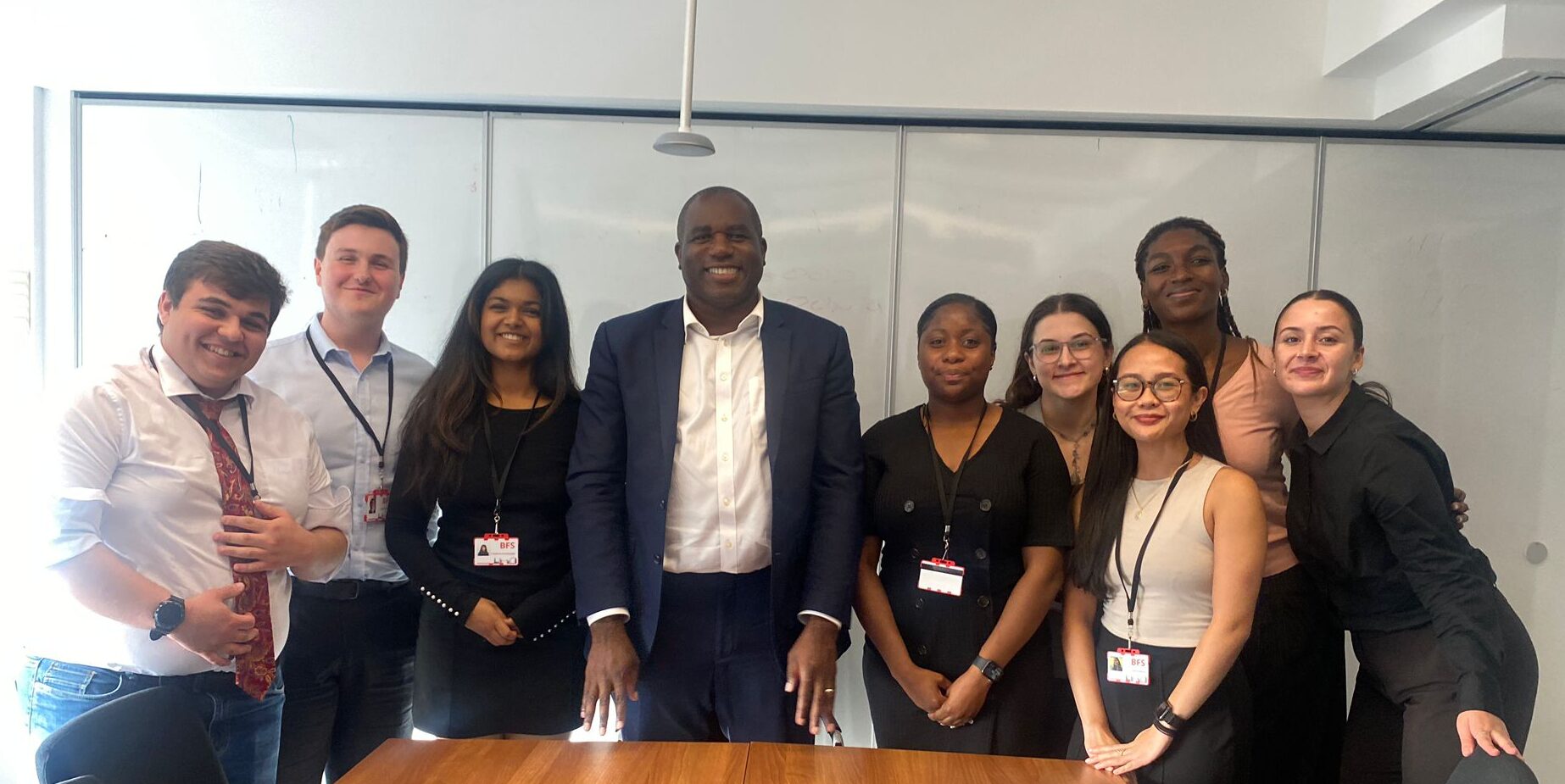
The Idea of Persivilience: A Motivating Masterclass with Alastair Campbell

The Idea of Persivilience: A Motivating Masterclass with Alastair Campbell

Emily Holmes is a graduate management trainee at Nottinghamshire County Council, having graduated last year from the University of Nottingham with first class honours in History and Politics. Whilst completing her degree, Emily participated in the Patchwork Masterclass programme and found the experience both informative and inspiring. She is passionate about human rights and the intersection between political and humanitarian spheres; this has led to a range of research and campaigning work for Amnesty International, Care4Calais and The Rights Lab.


After recently graduating from Patchwork’s Masterclass programme last year, I have been looking forward to engaging with the alumni community and continuing to #GetInvolved. When I saw that there was going to be a Special Masterclass with Alastair Campbell, such a prominent figure who I had frequently referenced in both my degree and A-Level studies, I was extremely excited. The Rest is Politics podcast and his recent book, But What Can I Do? are recent projects which have increased the engagement of Campbell with a younger audience, and I was looking forward to hearing more about these.

The Masterclass began with discussing the importance of getting involved in politics, and how every aspect of his career was made possible due to him being curious, interested, and having an opinion. He encouraged us all to never be fearful of who we are or what we think, as people from a diverse range of backgrounds are the future of politics. It felt very apt to hear such advice whilst sitting in a room full of fellow Patchworkers, a hugely diverse group of young people, all eager to be politically active and have a positive impact. 

Topics regarding confidence and self-esteem were covered, with Campbell noting that success in politics often comes down to how people convey their confidence. Listening to him talk so openly about the realities of public life and the importance of being confident, Campbell almost instilled a sense of assurance to everyone in the room, that we already had the skills, experiences and knowledge to make a difference, but if we are to be successful in politics specifically, our confidence would need to shine through. Struggles with mental health were also covered, and it was moving to hear Campbell talk so openly about his own experiences. He implored us to practice being confident, even in the face of such struggles, and reassured us that despite the scrutiny and media attention that individuals in the centre of politics are subject to, practice and experience makes it much easier. 

My question to the speaker focused on how to reconcile wanting to be really involved in, and passionate about, politics whilst also not becoming drained and demotivated by political decisions and rhetoric which go against what you believe in. We discussed focusing on the idea of ‘persivilience’ – a term coined in his book to encapsulate being both perseverant and resilient. Anger needs to be turned into something positive, that we should use our sense of injustice to ‘get the good out the bad’ and keep going until change is made. Campbell also acknowledged that it is okay to take a break and take a step back when political issues are draining, particularly on heavy subject matters, linking back to his earlier statements about the importance of protecting your mental health and wellbeing. I found this both inspiring and reassuring, as it is difficult to be constantly switched on and up to date with everything in politics. 

Overall, the Masterclass was motivating and I could sense that many of us left feeling extremely encouraged by Alastair Campbell’s own experiences and advice. Campbell proclaimed that our voices matter just as much as anyone else’s, that things are constantly changing so there is no reason to believe that we cannot contribute to such change. As someone who has just started their career in the political sphere, I am excited to use some of the ideas that Campbell offered in this session, and move forward with the ‘persivilience’ which he emphasised.

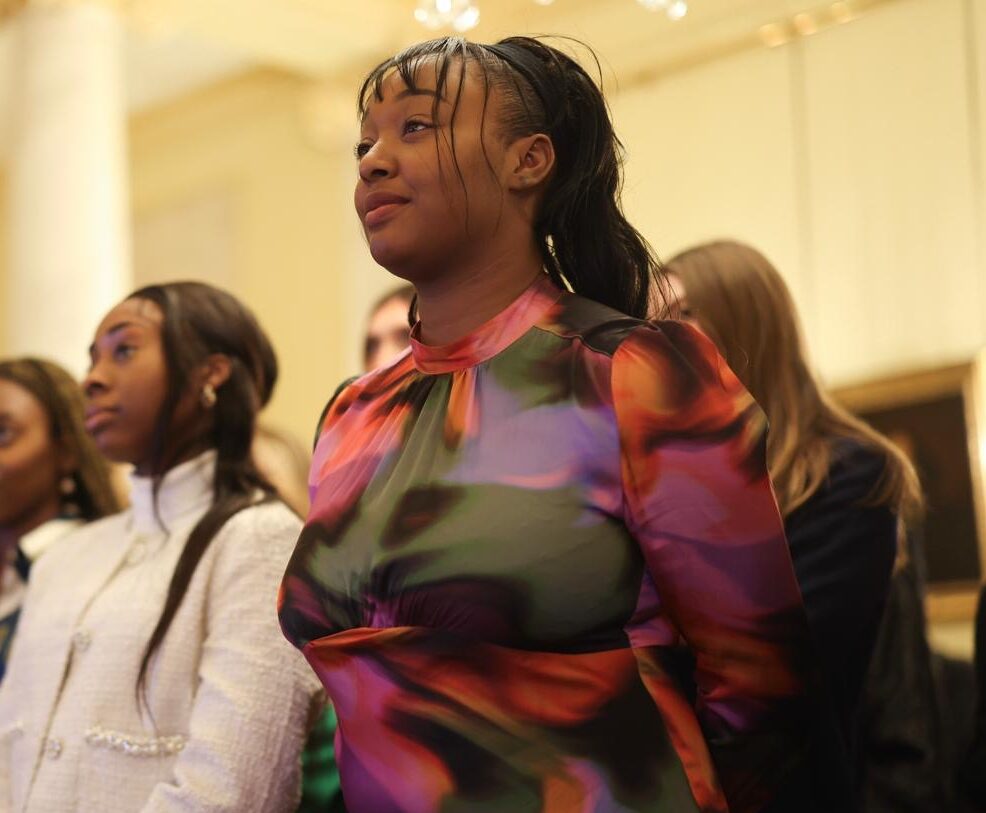
Learning and Growing: A Student’s Perspective on Mark Drakeford MS’s Inspiring Masterclass

Learning and Growing: A Student’s Perspective on Mark Drakeford MSs Inspiring Masterclass

Zak is a law student and education activist who co-founded Educate2Youth, a campaign focused on bridging the knowledge disparity across different socio-economic areas. His commitment extends beyond academia, evidenced by his love for connecting with people from diverse backgrounds. This passion led him to co-found The Jagan Club, an exclusive community for individuals of South Asian heritage. His involvement in both educational reform and community building showcases his multifaceted approach to leadership and social advocacy.


In April, I attended a Masterclass with Rt Hon Mark Drakeford MS that opened my eyes to a new perspective of understanding leadership, resilience, and personal growth. It was a setting where every participant, including myself, was reminded of the importance of growth and learning! 

Leadership Through a New Lens

The concept of leadership took centre stage during the Masterclass, but not in the traditional way I was accustomed to hearing about in lectures or textbooks. The discussion challenged us to view leadership through the lens of vulnerability and authenticity. This idea struck a chord with me because, as a student, I’ve often equated leadership with assertiveness and having all the answers. I learned that true leaders are those brave enough to admit their uncertainties and learn openly in front of their teams. 

The Power of Resilience

Another key theme was resilience, which was discussed not just as bouncing back from failure, but as a proactive stance on personal and professional challenges. This concept of resilience as an ongoing journey rather than a one-time effort gave me a lot to think about, especially in terms of my own educational and career aspirations. Mr Drakeford shared anecdotes about personal setbacks that, while not specific, were incredibly motivating. It was inspiring to hear how resilience could be cultivated daily, not just when faced with significant obstacles.

A key takeaway was the emphasis on resilience as a continuous, intentional practice rather than merely a reactive state. Mr. Drakeford illustrated resilience not just as recovering from setbacks but actively preparing for them through mental and emotional fortitude. This redefinition of resilience has encouraged me to adopt a more proactive approach to challenges, viewing them as integral to personal and professional development rather than obstacles to overcome.

Connecting with My Journey

These discussions made me reflect on my own path as a student. I’ve faced academic challenges and moments of self-doubt, especially during tough exams or project deadlines. The Masterclass encouraged me to think of these not just as hurdles, but as opportunities to build my own resilience and redefine what being a leader means to me. 

In conclusion, the Masterclass was more than just a lecture—it was a meaningful conversation that challenged and inspired me. It pushed me to think about how I can apply these lessons of leadership and resilience to my life, both as a student and beyond. I left feeling more empowered to tackle my studies and future career with a renewed perspective and vigour.

Exploring Political Journalism: My Masterclass with Eleni Courea

Exploring Political Journalism: My Masterclass with Eleni Courea

Sabrina (she/her) is a second-year undergraduate studying BSc (Hons) International Political Economy at City, University of London. Alongside her studies, she holds various roles including Communications Assistant, Widening Participation Ambassador, and volunteer positions such as mentor for CityBuddy and Debate Mate, as well as involvement in the Wandsworth Youth Council. She previously did spring insight programmes and internships with the Civil Service, Schroders, American Express and RPC. With a passion for education and community empowerment, Sabrina joined the Patchwork Masterclass Programme to refine existing skills and gain new ones crucial for her future as a changemaker.


When the opportunity arose to attend Eleni Courea’s Masterclass at The Guardian as part of the Patchwork Masterclass programme, I jumped at the chance. Rushing from work to the tube, my anticipation grew with each step towards the Guardian’s office. From Ms Courea’s early days as an intern at Cyprus Mail to a Political Reporter at The Times to her current role at The Guardian, Ms Courea’s path underscored the multifaceted nature of political journalism and the dynamic experiences it offers. As someone fascinated by media and communications, alongside my studies in politics, I knew this session held the promise of invaluable insights.

Ms Courea’s introduction to her role as a Political Correspondent set the stage for an evening of enlightenment. With enthusiasm and passion, the discussion peeled back the layers of political journalism, offering glimpses into what the day looks like, and the challenges and triumphs faced in reporting in an ever-changing political arena. One of the themes we discussed was maintaining impartiality on issues that may be important to an individual. As someone with a strong interest in storytelling and communication, I understand the importance of presenting information objectively. Ms Courea’s emphasis on fact-based reporting resonated with me, reminding me of the integrity that lies at the heart of effective communication in any field. It was clear that upholding impartiality in journalism is about reporting the facts, committing to integrity, ensuring that her audience receives information free from bias, and empowering them to form their own informed opinions. 

Navigating politics hinges on an individual’s political engagement. I’ve always seized the chance to step beyond my comfort zone; this is a talent I decided to hone while participating in Patchwork’s Masterclass programme. When advising young individuals who aspire to enter the realm of British politics and journalism, the session touched upon engaging in grassroots political activities, such as canvassing, as an excellent means of becoming connected with local parties at a community level. I agreed with this because I have canvassed with Patchwork in my local boroughs of Wandsworth and Merton and had the opportunity to speak with people from various backgrounds, explore the subtleties behind different policies and political perspectives, and gain an accurate grasp of how the British political system works.

As a digital native, I’ve also witnessed the rapid changes in how we consume information. One of our discussions centred on the rise of AI in media. This lent itself to a conversation about the key benefits and challenges AI brings to the field, where we discussed the development of AI tools used for transcription, making translating video content into written information more efficient. The insights into embracing innovation in journalism, from AI tools to multimedia content, got me thinking about the exciting possibilities that lie ahead in media and politics.

My final key takeaway from the Masterclass is to be confident in your work. My question at the end of the session opened up a discussion on the challenges in one’s early career. The advice to be professional, be confident in your work, and foster relationships resonated with me. I saw this as a powerful illustration of tenacity and resilience—two qualities that are crucial for success that I will continue to employ as I advance through the Patchwork Masterclass programme, knowing they’ll be fundamental in navigating my time at university and future career. 

Overall, Eleni Courea’s Masterclass was a thought-provoking experience that left me feeling inspired and empowered. The lessons learned during this session will undoubtedly shape my career in the future.

Meet the Patchworkers in Politics!

Meet the Patchworkers standing for election in 2024

As part of our #GetInvolved programme, we’re spotlighting the Patchworkers who are getting involved in politics so future generations of Patchworkers can learn and be inspired to #GetInvolved themselves. This is not an endorsement of these individual campaigns but demonstrates how the Patchwork journey can enable young people to get involved in politics.


[us_separator size=”large”][vc_row_inner][vc_column_inner width=”1/3″][us_image image=”4910″ size=”us_600_600_crop” style=”shadow-2″][/vc_column_inner][vc_column_inner width=”2/3″][vc_column_text]

Samia Hersi

2018 Masterclass graduate and 2021 Party Conference Programme delegate
Conservative Prospective Parliamentary Candidate, Queen’s Park and Maida Vale 

“I am standing because I want to make a difference in my community because I care and want children and young people to have the same opportunities as I had. My time with Patchwork helped me understand more about how politics and Parliament work and encouraged me to actively get involved in my community, and eventually to stand for Parliament.

We need young people to engage with the political and democratic process because the decisions made have a huge impact on all of us, especially on housing. I believe if you want to see change you’ve got to be part of it.”

[/vc_column_text][/vc_column_inner][/vc_row_inner][us_separator size=”large”][vc_row_inner][vc_column_inner width=”1/3″][us_image image=”4920″ size=”us_600_600_crop” style=”shadow-2″][/vc_column_inner][vc_column_inner width=”2/3″][vc_column_text]

Elena Dirik

2023 Masterclass graduate and 2023 Labour Party summer intern
Labour Party councillor candidate, Bristol City Council ward of Clifton

“I am standing because I am committed to tackling the injustices many face and removing barriers that will enable individuals to lead fulfilling lives. I aim to empower young people, particularly from underrepresented groups, and help them realise the value of their voices and lived experiences in political spaces. Patchwork has been a vital source of empowerment, helping me build my knowledge and bolstering my confidence to advocate for what I believe is just and fair.

It is important for young people to get involved in politics as we play a crucial role in shaping the present and the future, and amplifying young and diverse perspectives is essential for creating effective and inclusive politics and policies.”

[/vc_column_text][/vc_column_inner][/vc_row_inner][us_separator size=”large”][vc_row_inner][vc_column_inner width=”1/3″][us_image image=”4909″ size=”us_600_600_crop” style=”shadow-2″][/vc_column_inner][vc_column_inner width=”2/3″][vc_column_text]

Joseph Fox-Bowen

2023 Masterclass graduate and 2022 Party Conference Programme delegate
Conservative Party candidate, Bristol City Council ward of Hartcliffe & Withywood

“I am standing because I want to dedicate the rest of my life to public service, getting a real kick and sense of purpose from helping improve other people’s lives, no matter how small the improvement. My time with Patchwork has given me a greater strength in my conviction, giving me the confidence to persuade both myself, the party and hopefully the residents that I am worthy of standing in this ward.

If there’s one piece of wisdom I would give to young people struggling to place themselves in a sometimes seemingly bleak future, it would be to do something selfless. Get involved in your local community and do something no matter how small, because helping others may even help yourself.”

[/vc_column_text][/vc_column_inner][/vc_row_inner][us_separator size=”large”][vc_row_inner][vc_column_inner width=”1/3″][/vc_column_inner][vc_column_inner width=”2/3″][vc_column_text]

Patchwork Internships: Labour Party Internship Now Open!

Applications are now open for our summer internship with the Labour Party! For more information and to apply, visit our website here. The deadline for this internship is 9am, Monday 13th May. You can read more about our summer internship with the Labour Party below, or about all our internships here.

The Labour Party will be running a six-week summer paid internship in partnership with the Patchwork Foundation for 2024. This is an exciting opportunity to work at the heart of politics, gain work experience, and learn more about how the Labour Party is run. Throughout your time with the Labour Party, you will be supported through training and development to help you enter the world of politics.

This programme is a diversity internship, designed to ensure the equal representation of all demographics in politics. This scheme is designed for individuals who face societal barriers to engaging with politics, specifically focusing on individuals who come from ethnic minorities or lower socio-economic backgrounds. In addition, this is a national scheme, and we would particularly welcome applications from candidates from across all of Great Britain. Successful candidates will be supported with travel and accommodation costs to enable them to undertake the internship.

We are looking for candidates who are interested in exploring the opportunities a career working in politics provides. Whilst experience of political activism in the Labour movement is helpful, the programme is primarily directed at people who have no experience at a national level. This programme is for individuals who have a passion for politics and align with the values of the Labour Party.

If you have any questions, please email [email protected]

Running Towards, not Running Away: A Masterclass with Anas Sarwar MSP

Running Towards, not Running Away: A Masterclass with Anas Sarwar MSP

Sophie (she/her) is a third-year BSc Biology student at The University of Sheffield. She holds a range of roles at her university, including on the LGBTQ+ Representative Committee, Forge Press, Diversity Champion & SUTCo Production Manager, among others. She has a keen interest in intersectionality in politics, particularly regarding the sciences, promoting politics to young people, LGBTQ+ rights and cooperation between groups both within & outside of Parliament. Sophie joined the Patchwork Masterclass Programme to refine existing, and gain new skills crucial for a future changemaker or potential public servant, whether in Parliament or elsewhere.


Leading the third largest party in Holyrood and dealing with the challenges spearheading the devolved wing of a national political party brings, Anas Sarwar MSP contends with a range of unique challenges in his position as Leader of the Scottish Labour Party and MSP for Glasgow (region). As a former NHS dentist and Westminster MP, Mr Sarwar’s career has been anything but linear, but this pathway may have given the MSP a degree of experience unlike any others in Holyrood. Sitting down with the ‘Mini-Ministers’ Patchwork cohort, Mr Sarwar spoke to us about his career, life as an MSP and how Scotland and the Labour Party interface in the political crucible of Holyrood.

The most striking concept that Mr Sarwar spoke about was one of the catalysts for his progression into politics: the desire to advocate for change. With political spheres around the globe becoming continuously more polarised, many single issues can often define a person’s voting intention or even attitude towards a particular party or politician. It was on this issue that Mr Sarwar’s words had the biggest impact on me. No party is perfect, and we can each advocate the change we want to see with much greater effect within a group than from outside; I found some of my strongest viewpoints being fundamentally challenged. By running towards an issue we face, whether politically or within our wider lives, we can effect change much more reliably than avoiding an entity because of it. Whilst it may seem a simple point to be making, I found my entire attitude towards particular parties changing right in front of me.

It was also particularly fascinating to learn more about Mr Sarwar’s career progression, especially his prior job as an NHS dentist. Many politicians, including some prominent former Cabinet members, have said they believe candidates should have experience in unrelated jobs before entering Parliament. And if Mr Sarwar is anything to go by, this is a fantastic idea! Despite on the surface appearing to have little in common, as we walked through his career so far, the similarities between the two jobs were surprising, from listening effectively to people and working with them to resolve an issue to being honest about the challenges faced in order to get there. Mr Sarwar may have had one of the more unusual journeys to reach Parliament and Holyrood, but a surprisingly applicable one, which made me reconsider my own future as well, as someone studying a scientific degree myself. 

A considerable section of my degree focuses on the impacts of climate change and the need for immediate, drastic action in order to remedy it, but rarely how scientists can advocate effectively for those changes to be made. Those within political spheres often lack specific knowledge in some key areas, with few biologists or scientists in Parliament. But Mr Sarwar has shown that the transition from STEM to politics is not only possible, but crucial. By combining the scientific knowledge provided by my degree, and political expertise from figures such as Mr Sarwar, it will be increasingly possible for experts in their field to not only lobby for change, but be the ones to implement it. Learning about the threats to our planet have made me strive to be the change I want to see, and Mr Sarwar’s words have been instrumental in allowing me to see this future reality, and want to reach further than ever to achieve it.

A final key point that I took from Mr Sarwar’s Masterclass was the need to get young people involved in politics at all levels, from grassroots to nationally. 2024 is set to be an important year for elections, both worldwide and in the U.K. specifically, with a wide range of pressing issues at the forefront of everyone’s minds. But whilst many are able to understand what an issue means and have opinions on the viewpoints individuals take, few of us are active campaigners on these issues. Mr Sarwar emphasised how important young people feeling engaged and involved in politics is, after he himself joined his party in his teenage years. Young people have a unique perspective on issues that many other groups often don’t, yet we’re often the least represented in politics at all levels, including campaigning and canvassing. Mr Sarwar’s focus on his own introduction to politics and the need for young people to stand up and be counted, not only at the ballot box, showcased his heartfelt desire for more of us to be engaged and make our voices heard, especially with so many elections happening this year. There are opportunities for us all to get involved in one way or another and we need to be taking them in order to advocate for the change we want to see on the inside, rather than from the sidelines.

Having my first Patchwork Masterclass with Anas Sarwar MSP was always going to be an unforgettable experience, but I had never imagined it would shift some of my own beliefs so fundamentally in such a short period of time. To hear from someone who has overcome unique challenges to reach the height of the Scottish Labour Party in the way that he has was an incredible opportunity for someone who finds herself at a crossroads in her career. Mr Sarwar’s words were inspirational and have left me with much to consider as I begin a possible political career of my own.

A Strategy for Success: My Masterclass with Deborah Mattinson

A Strategy for Success: My Masterclass with Deborah Mattinson

Matthew studies MSc Economics at the London School of Economics and Political Science after completing a BSc in Philosophy, Politics and Economics (PPE) at the same institution in 2023. Growing up in a small village on the Wirral, Matthew strongly champions the involvement of marginalised communities in all aspects of the political process, drawing on his working-class roots. He possesses a particular interest in the use of economic tools to reduce structural inequality.


As I ran down the stairs to catch the bus to Norton Rose Fullbright, location of our first Patchwork Masterclass, Labour Party leaflets poked through the letterbox, invitingly placed to be snatched and analysed by a political nerd like myself. Scrolling through social media during the journey, Labour Party posts, from interviews to memes, were omnipresent on my timeline, all in anticipation of the following day’s Budget announcement. I overheard the conversations of office workers as I attempted to navigate the labyrinth of London Bridge Station – just what did the recent by-election results mean for Labour and their General Election strategy? 

Despite her influence being so visible within our daily lives, placing 5th on Politico’s Power 40: London class of 2023, ranking the most influential agenda-setting individuals in British politics, I think it is fair to say Deborah Mattinson was a name few in our Patchwork cohort of politically motivated individuals were familiar with before our Masterclass. Ms. Mattinson is currently the Director of Strategy for Sir Keir Starmer and, since joining Labour in 1983, has maintained a growing and significant influence on the Party’s policy and strategy, most notably acting as pollster and advisor to Gordon Brown during his time as Chancellor, and later, Prime Minister. She also founded research and strategy consultancy, BritainThinks. 

As a member of the Labour Party myself, before even researching Ms. Mattinson, I was greatly looking forward to hearing from someone at the top of the Party apparatus. I have often felt an almost insurmountable division between the small village on The Wirral I grew up in and the political realm, with little representation at the pinnacle from individuals in working-class communities like my own. Just how to enter and optimally make a difference in politics had proved a daunting question to answer, so who better to open the Masterclass programme than a successful figure right at the top of Labour, a position I aspire to emulate.

A focal point of Ms. Mattinson’s remarks were top tips for a career in politics. When thinking about my future career, I have found it is easy to possess too narrow of a focus – ‘to get into politics’ is such a simple and obvious answer, yet lacking any substantiation. The path to success and contributing meaningfully was foggy, and two key bits of advice Ms. Mattinson stated resonated significantly with me.

The first of which is to have a craft skill. A craft skill is something that can never be taken away from us, that does not simply come from connections and background, but through grafting and hard-work, the necessity of which Ms. Mattinson was also keen to stress. For Ms. Mattinson personally, this was a close connection to the public, and most importantly, the voter. Her work in advertising formed the foundations of a polling and political career where her knowledge of how to connect and talk to the population’s needs, both privately to the general public, advertising the latest products or deals, and politically to the electorate. 

‘To get into politics’ is a valid aspiration, but it is so necessary that our career planning does not end there. As young people and Patchworkers, we must fill in a gap – I can bring __________ to politics. For myself, that is my Economics degree, a field so intertwined with the political field. And as mentioned, for Ms. Mattinson, a dialogue with the public. So many may have a general interest, but ensure you have something that makes you an invaluable figure in the room.

Second is the necessity to think about the voters themselves in politics, something more obviously said than practically done. A common theme of motivation for my fellow Patchworkers and I is the desire to advocate for the communities that we come from, communities that may be underrepresented in government. Listening to Ms. Mattinson, it is crucial that we do not become detached from that as we embark on our careers. It ensures the substantive representation in politics we seek to bring, simultaneously resulting in success – a party running on a platform that speaks to the majority of voters’ preferences will win. As we progress through our careers, and for politicians globally, it can often be easy to both rest on your laurels and assume you know the voters’ needs and wants. Listening to the voter is at the heart of Ms. Mattinson’s career as an expert in mediums such as focus groups, polls, and surveys, the backbone and driver of her role as Director of Strategy. Listening to the voter and keeping them in the back of our mind is something that should never leave us if we want to succeed. 

Overall, our first Masterclass with Ms. Mattinson will be one long remembered by my fellow Patchworkers and I. Discussing the session after the Masterclass, it was clear that no matter our political persuasion or opinions, Ms. Mattinson’s expert advice was universally deemed invaluable as we seek to optimally launch our political careers and succeed long-term. Certainly, her “10 Top Tips” will be a crucial point of reference for the years to come!

Alumni Spotlight: Parth Devalia

Alumni Spotlight: Parth Devalia

Parth Devalia is a political and policy consultant at Flint Global focusing on energy and sustainability issues. He previously studied Economics at the University of Warwick, and is an Alumni of the 2022 Masterclass programme.


What are you up to at the moment?

Right now I work at a political risk consultancy called Flint Global, focusing on the energy sector across the UK and Europe. Flint basically advises companies on how best to deal with the political, policy, or regulatory issues they face, and in the energy team a lot of our work is on advising companies that are integral to the energy transition. They can range from retail energy companies to those developing nascent renewable technologies – such as hydrogen, floating offshore wind, carbon capture and storage – and it’s great to gain experience across an area so important to sustainability and achieving net zero.

Flint’s also an incredible place to work because of the people – I was overawed at first, but I’ve now gotten more used to working alongside colleagues experienced at the highest levels of government and regulators, who are also just really lovely people. I’m learning a huge amount each day!

What has your journey been like since finishing the 2022 Masterclass programme?

Looking back it’s been intense – in the little over a year since finishing the programme I’ve graduated from university, interned in the civil service and private sector, moved from home to London and back, and I’m now seven months into my current role.

Despite these changes, it still only feels like last month we were stepping into No 11 Downing Street for the Masterclass graduation ceremony – peering up at the old portraits of former Chancellors, snacking on every passing canapé and listening to Alumni say that this was just the beginning of our time with Patchwork (they were right!). By then, the programme had shown me the variety of options available around politics and government, giving me the confidence to spend a year doing internships in this area after finishing my studies.

I started with the civil service and was placed in the Department for Energy Security and Net Zero (DESNZ) where I worked on the UK’s strategy to mobilise green finance. I spent the months absorbing everything about the UK’s approach and policy framework, transition plans, what the ‘Green Taxonomy’ is, and eventually delivered a project detailing the improvements needed for successful voluntary carbon markets (VCMs). Equally importantly, I learnt the practical workings of the civil service: how government consults with business over policy proposals, the roles and responsibilities at each Grade, what special advisers (SpAds) do, the broader stakeholder engagement that goes into policy formation, and a few of the million different acronyms they have for things.

These lessons proved extremely valuable for a later internship at Flint. This internship was a complete step-change in pace compared to the civil service, and I enjoyed developing the classic core consulting skills while working across a variety areas including geopolitics, tech regulation, and energy policy. I realised this was where I wanted to start my career and I’m glad to say I’m now well into and settled in my role.

You’ve done lots with Patchwork, with experience of the Masterclass and Conference programmes, mentorship scheme, and you’re now volunteering as Alumni. Looking back, which moment stood out for you the most?

Tough to choose just one! What comes to my mind is a moment actually after finishing the Patchwork programmes.

A tiny bit of background – Flint is a current sponsor of the Masterclass programme, and as part of my role I help run Flint’s relationship with Patchwork. One of the events we run in-person each year is a simulation scenario of a government process such as a spending review – where Patchworkers are divided into different ‘teams’ of government departments, and each department has to negotiate with the Treasury team to convince them to fund their departmental objectives (as happens in real-life governmental spending reviews). It’s frantic and hectic but a lot of fun and in the end each team has to present the outcome to ‘No 10’ (Flint Partners).

I helped organise last year’s event and fortunately it went really well – a highlight being our new Patchwork CEO, Claire Eadington, joining in as part of the ‘No 10’ team – and we got great feedback about the session. Running this was so special because one year before, I had attended the same exact session but as a Patchworker on the Masterclass programme – and a year later here I was organising the event having entered working life. It was a real full-circle moment for me and I’m fortunate to be able to give back to Patchwork through my role.

Some core Patchwork values are respect, empathy, and openness. What does this mean to you, and why is this so important in politics?

We all know the problems with political culture today – short-termism, partisan pandering, a feeling of missing accountability, honesty, etc. We also know these things contribute to low trust in politics and the political process, and arguably widespread disengagement with politics, in particular amongst young people.

I think these Patchwork values – respect, empathy, openness – are important in creating a culture where young people from wildly different backgrounds, and even more diverse political views, can come together to engage with people that directly challenge their own perspective. This kind of constructive engagement, where we learn to how to disagree well with each other, is important for bringing depth back into our debates and elevating politics back to addressing issues of substance. I think this is needed because, like most Patchworkers, I see politics as too important to be ignored – there’s so much potential for positive change, to bring people together and feel they are contributing to something bigger.

Relatedly I’ve always felt that kindness is a strength, particularly when not being on the receiving end of it. It’s easy to get drawn into a spiral of negative discourse, but if you can stay unruffled and remain respectful, even caring, for someone who isn’t being that way to you, I think that says a lot about you!

Any parting pearls of wisdom?  

My top advice for people just entering professional life is to work sustainably. You don’t need to do everything at once – it’s far better to be aware of your limits, manage yourself well, and grow your abilities over time, rather than over-exerting yourself. More important than any skill is being resilient, which makes you reliable and trusted in what you’re doing. (I think I learned this the hard way.)

And – notwithstanding the above – I’d advise Patchworkers to just get stuck in with what Patchwork offers as much as you can. If you’re unsure what route you want to take, doing the different programmes and learning as much as possible will help you figure out your way forward and what interests you the most. Don’t be put off from applying to things that seem out of reach or from putting yourself forward for opportunities outside your comfort zone – you are the only one with your experiences and perspective so don’t doubt how much you can offer!


Building A Vision: A Masterclass with Sir Simon Fraser

Building A Vision: A Masterclass with Sir Simon Fraser

Albert Salimov is a third-year Politics and International Relations student at the University of Nottingham and is currently an intern assistant for Alex Norris MP. As part of the Parliamentors programme, he has co-created Young Network, a youth enrichment programme specialising in equipping young people from underserved communities with professional skills through six free weekly sessions. He is passionate about diplomacy and debating, presiding as publicity officer for his university’s UN Society and organising and chairing at international Model UN conferences. Badminton is another passion of his, having led the UoN Men’s 5th team as captain in 2023. Last June, he volunteered in Nepal as a school teacher in a development project and enjoys making a positive difference in his community.


With the Induction still fresh in our memories, it was great to exchange our hellos in the lobby of Flint Global before the Political Fish began their first Masterclass of the Patchwork programme with Sir Simon Fraser GCMG. The Masterclass provided us with a unique opportunity to speak with a former diplomat and civil servant about Simon’s extensive career and to hear his wisdom on the importance of leadership, transferrable skills, global affairs, and career advice. 

It was a great privilege to begin our first Masterclass with somebody with such a wealth of experience. Simply put, Simon began his career at the Foreign and Commonwealth Office in 1979 before serving in diplomatic posts, most notably in Baghdad, Damascus, Paris, and Brussels. He then served as Director-General for Europe and Globalisation and later as Permanent Undersecretary at the FCDO. Because of his background, I had so many questions I wanted to ask, and I was looking forward to hearing about his experiences working overseas and about current global affairs. 

When discussing Simon’s past career prospects, the importance of reserving ones energy was mentioned. To do this, we need to know how to switch off to allow our minds to rest and our energy levels to replenish. I think this is crucial as life will always have its ups and downs, and the same is true for the workplace. To have energy in reserve, we allow ourselves more opportunities to excel in our responsibilities and help those around us who are struggling. As a current second-year university student, I know that things will only get harder, so whether I’ll be writing my dissertation, working on a group project, or meeting future work deadlines, it was encouraging to hear this topic being discussed so that we can be prepared for when life throws its biggest challenges. 

The Masterclass also covered current global affairs that are causing significant ramifications to our lives. Indeed, we are living through a precarious time – things are moving more quickly, whether it’s the climate crisis, Russia’s invasion of Ukraine, the rise of Artificial Intelligence, or the geopolitical rivalry between China and the USA, an echo of the not-too-distant Cold War rivalry.  The discussion surrounding this topic reflected the need to always show empathy and to understand each other, especially because history tends not to move in one direction. The importance of knowing what you want and knowing that this will always change as time progresses was definitely something that will stick with me. This may require us to do something that’s required of us to get where we want to be in the future. Because of this, I’ve realised the importance of long-term vision and decision-making, adopting it into my approach to increasing my university experience and aspiring future career journey at the FCDO. Such an approach has boosted my motivation and confidence in looking ahead. 

It was an incredible privilege to begin our Patchwork Masterclass journey with Simon as our first tutor. What made the Masterclass even more valuable was how relatable Simon was in his delivery and his interest in what we thought as candidates. His wisdom and accomplishments gave us so much food for thought and I’m grateful for the time and advice Simon shared with us in kickstarting our Patchwork journey.

Navigating Politics: Reflections from Steve Rotheram’s Masterclass

Navigating Politics: Reflections from Steve Rotheram’s Masterclass

Leanne studied History & Politics at the University of Cambridge, graduating in 2022. She is training to be a solicitor with Magic Circle law firm Linklaters. She has worked alongside young people from disadvantaged communities through various job opportunities, such as working with The Social Mobility Foundation and volunteering organisations such as Zero Gravity.


In the last few months of my journey with Patchwork, I had a Masterclass with Metro Mayor Steve Rotheram. Rotheram is Liverpool City Region’s Metro Mayor, a post he has occupied since 2017. Prior to this role, Rotheram served as an MP in Parliament. Rotheram’s journey into politics made for a compelling Masterclass, leaving school at 16 to become a bricklayer and starting his own company at 22. Much of our discussion compared Westminster politics to regional politics and explored the impact one can have both in and outside Westminster. 

One of the key themes we discussed was the various events that have shaped Rotheram’s politics. Part of the reason I was interested in the Masterclass programme was that I hoped to develop my own politics; it was one of the central questions I hoped to answer by the end of the year to have a clear grasp on how political figures came to understand where they place themselves on the political spectrum. For Steve, a combination of personal upbringing and national events such as the Hillsborough disaster – in which he advocated for the families – inevitably impacted his politics. I wondered what world events would impact mine or others of my generation: perhaps it might be global events such as #BlackLivesMatter, the #MeToo movement, tuition fee increases or the COVID-19 pandemic. Given the shared mediums through which people consume information, it means that young people are exposed to much of the same debates and information, and this will inevitably form many people’s political stances alongside their personal experiences and upbringing.

Navigating political development is also impacted by an individual’s willingness to engage in politics. I have always taken opportunities to push myself out of my comfort zone; a skill I chose to develop while part of Patchwork’s Masterclass programme was canvassing. Rotheram emphasised how canvassing can be an excellent tool for personal development. I found this to be true when speaking to members of the public, having conversations with people from various backgrounds and being able to approach strangers with the hope that they will want to interact and share their political beliefs. On offering advice regarding what young people should do to get involved with local politics, Rotheram suggested canvassing as a great way to engage with parties at a local level. I agreed as I found that conversations through canvassing felt much more like dialogue rather than being didactic. It was a chance for me to explore the nuances behind the different policies and engage with different political ideas.

My final takeaway from the Masterclass was to be bold in reimagining what local politics can offer for communities. One question asked by the Masterclass participants focused on promoting and preserving the city’s cultural assets.: ” This question lent itself to a conversation about historical artefacts, but the session interestingly touched upon more broadly about the Race Equality hub. The hub was created to support the career opportunities for Black, Asian, and Minority Ethnic communities and the development of Black, Asian, and Minority Ethnic businesses across the Liverpool City Region. The hub acknowledges the historic contributions of these communities to Liverpool and aims to address remaining inequalities. I interpreted this as a moving example of preserving and promoting a city’s cultural assets – where assets can also be considered the memories, experiences, and livelihood of these communities. The hub contributes to their inclusive legacy and serves the communities not just symbolically through artefacts but creates spaces of action and lasting change for the better.

Overall, Rotheram’s enthusiasm and passion for wanting a better future for Liverpool stood out to me. I think we can all take away the same enthusiasm and passion to strive for better for our own communities.