Alumni Spotlight: Leah Thompson

Leah Thompson is a Patchwork Foundation Masterclass 2020 Graduate. Upon completing an apprenticeship in June 2019, Leah decided not to go to university just yet but instead focusing on her career and develop herself as a person, which was achieved through the Masterclass Programme. She considers herself to be a hardworking individual who is always willing to go the extra mile to help somebody. She loves a good challenge and is always up for a laugh! Leah currently works for the Council in Leicester in an Administrative role.


What are you up to at the moment?

I work for the council in Leicester. I started off as an apprentice – realized the other day I’ve been working there for three years now! It’s flown by! I’ve gotten to grips with learning different areas of the business now. I’m based across two teams at the moment, and I’ve developed a love for finance strangely, which is weird because I hated maths at school!


What would be the dream job?

I’ve always wanted to be a solicitor, but I’ve never studied anything to do with law. I’ve trying to debate at the minute whether to go to university or not.

Since doing the Patchwork Programme, I’ve learnt that even though sometimes it was a full on day at work and then we weren’t switching off until half 7 because there was a Patchwork session, I feel like it’s been really beneficial. So that’s kind of given me the aspiration to push myself – I now know that if I wanted to I could do a course online and still carry out my day job.


You’re involved with the Care Experienced Consultants. Can you chat more about what that is?

I’ve been involved for two years now, and I’m the co-Chair at the minute!

The Care Experienced Consultants are a group of young people aged 16 to 25 who are currently in care or have left care within Leicester City. As a group we meet with decision makers such as directors and service managers within the council to help improve services for Looked After Children. We are also part of the Corporate Parenting Forum, this consists of 5 sub-groups focusing on main areas such as independent living, housing, citizenship etc.


How has the Care Experienced Consultants been impacted by Covid-19?

We were proactive before the first Lockdown, but since then it’s ramped up massively and we’ve been meeting every week if not twice a week. For the people that were in the group and the young people we’re involved with who might be living alone, it was quite a scary experience and no one really knew what was happening.

One thing we started was ‘Monday Night Dinners’, and the idea behind that was that a lot of young people didn’t really have people to cook together with or eat with , so we started doing that virtually and breaking the isolation. We also had lots of fun taking it in turns to host a virtual quiz at the same time. We were actually shortlisted for an award as part of the National Care Leavers Bench Forum (NCLBF) best project award and …. We came joint 1st!

We’ve also done skills-sharing sessions. For example, I did a session on sign language and one person in the group is really good at rap so he did a music session!

It also gave us the chance to get a new logo and develop a new roadmap, as well as funding from a music producer who also then started coming in to do music sessions.


What were your take-aways from the Patchwork Masterclass Programme?

Every time I went to a session, people at work would ask how it was and I’d be like ‘oh it was amazing, better than the last one’ and I feel like I said that all year!

In each Masterclass I got better at getting the knowledge that I wanted out of the Speakers, and even though it’s only been a few months I’ve already referred back to the notes of what I learned through those sessions.

Beyond that, Patchwork has given me the groundwork to want to learn more about and get more involved in politics. I’ve become really interested in becoming a councillor so I’m now in touch with one of the councillors in the council to learn more about the role!


We’ve got our induction for the 2021 cohort next week – is there any advice you would give them?

Some of these opportunities you’ll never get again so get out of your comfort zone! If you’re offered an opportunity to chair, just take it and run with it.

Alumni Spotlight: Ekansh Sharma

Ekansh Sharma is a Patchwork Foundation Masterclass 2019 graduate. Upon finishing sixth form, Ekansh decided not to go to university but instead started his working career in a housing association’s community investment program. After several years he then joined Accenture on their degree apprenticeship program gaining skills as a Technology Consultant. He uses this experience to bang the drum for apprenticeships, holding a number of advisory positions including as non exec director at a global training provider and sitting on the apprenticeship stakeholder group within the Department of Education.


Hi Ekansh, what was your first experience of participating in local democracy?

In sixth form I remember we had a maths teacher that would make us copy notes out of the textbook, which is a really poor way to learn, so I started a petition to get the teacher replaced. Eventually every taught by the teacher had signed the petition and I subsequently had meetings with the Headmistress about teaching methods.


Your first role was in the housing sector which was completely new to you, how did you quickly get to grips with all the new knowledge that was required?

I’ve always thrived under pressure. I was also fortunate to have a supportive manager. You have to not be shy and get involved, ask for more responsibility or in the other hand tell people when you are overloaded with work. In the world of work no one can read your mind, so you have to make your expectations clear. Anything else is a recipe for disaster.


Why did you then choose to go down an apprenticeship route?

I’ve always been more of a practical learner and when I looked into options other than university, I realised a degree apprenticeship offered me everything I was looking for. You get a salary, you have no student debt and you also get experience whilst learning. It worked well for me though because I already had specific career goals in mind. You have to be driven and want to do it though as you have to motivate yourself. Imagine doing a Bachelor’s degree in the same time as a normal student, but working full time around that learning. Time management is key.


Your current role involves working all hours with teams covering different time zones, how do you stay organised?

Microsoft To-do is the best invention ever, especially as it integrates with Outlook. Otherwise set out time for yourself. For example, I set aside 20 minutes in the evening purely to respond to emails – I don’t like responding to things ad hoc. You have to be honest with yourself however and don’t cover up any mistakes as that will only make things worse. Ultimately you have to make the most of the current opportunities you have.


The teams you work with change often, what ways have you found to overcome the ‘new person’ barrier?

At an event I heard the phrase ‘Act like a groupie you will get treated like a groupie, act like someone important and you will get treated like someone important’. You have to be a people person though and personally I like to make a joke out of being the new person to bring other people’s barriers down. Also, it is important to have socials as well where people are then more likely to be willing to help. Everyone knows you’re new so don’t be shy, and if they don’t know you are new, let them know.


You’re hoping to run as a local councillor soon, what issues are you passionate about?

Social mobility is very close to my heart. My mother worked really hard, starting off as an immigrant farm worker and then progressing in her career to give me everything I’ve had. The ability for someone to work hard and progress, not just be stuck into your social life because you were born into it really resonates with me. Secondly, it would be greater representation and more access to opportunities for everyone.


What advice do you have for people that want to campaign on a specific issue?

Talk to people, email people. A really useful Masterclass taught me to compliment people, even if it is just complimenting what they said, then a few weeks later follow up with an ask for them. Don’t be scared to reach out and ask for support or information, not just with MPs but anyone who interested in campaigning in similar things. Many people are put off making that first step that is figuring out ‘how do we do this? Most people may ignore you, but not everyone will.


You’ve held a number of high-profile positions already in your career, how can Patchworkers get appointed to similar roles?

Network, network and network. For most, if not all, of the roles I have held I have been invited on to them after simply talking to someone that works within the team. Networking is a transactional relationship though, so when you talk to people you have to make sure you let them know what you are bringing to the table and how you can be helpful to them.


What has Patchwork has taught you?

Patchwork has been an invaluable resource. It has allowed me to meet a whole load of really inspiring people, some of whom I am in contact with regularly. It’s expanded my network massively. The Patchwork team has also always been there for me if I have ever needed any support. Ultimately Patchwork is like an extended family – whenever I have reached out someone has always been there.


Finally, what advice would you give to yourself when starting out in your career?

Don’t care as much about what other people think of you. It took millions of years of evolution to make you, so don’t try and change who you are. Just be confident, honest to yourself, speak out and always tell yourself you belong as you wouldn’t be in the room if you didn’t.


To get in touch with Ekansh please contact the Patchwork Foundation. His LinkedIn is  https://www.linkedin.com/in/ekanshsharma127/

Alumni Spotlight: Leonie Mills

Leonie has completed a master’s degree in Security, Leadership and Society focusing on Africa and other emerging economies. Recently, she has founded an organisation called ATOC that aims to change the way in which inclusivity is approached by businesses, hoping to centre the lived experiences of Black and ethnic minority employees. She writes for her own blog and for other publications, focusing on current affairs, race and gender. Previously she studied International Politics and Security Studies at Sheffield University, where she developed in-depth analytical skills. Leonie graduated from the Patchwork Masterclass in 2018.


First of all, you’ve spent most of 2020 and the pandemic in Ghana. Has it been interesting comparing the politics in Britain and Ghana?

African politics in general is so complicated because of colonization. They have a lot of external influences; we have a bit of American pressure and then we have remnants of British influence and then we just borrowed something from Germany – it’s just a lot.

But on the whole the Government has been more concise with their Covid messaging than the British government. So for example, they completely closed the borders in March and masks were immediately mandatory. We did kind of have a short lockdown in the main cities, but we don’t have the infrastructure to facilitate remote working and the Government realized they couldn’t provide for people in terms of food and water to sustain them. More people may have died of hunger.

We’re now almost back to normal. Lots of people thought that ‘Africa has no health infrastructure’ so we were going to be hit really badly, but the fact is we’ve dealt with more epidemic and health emergencies. It’s also a young population, there’s the heat, and our food has the essential minerals and vitamins.

But we still have fatigue because we’ve had health emergencies which have caused even more deaths than Covid. There was a meningitis outbreak around the same time, and people were wondering why the government didn’t have the same reaction to that outbreak.


Why did you join Patchwork, and what did you gain from it?

I was always super interested in politics, but when I studied it at university I was much more interested in different countries’ systems. So, when I saw that there was an opportunity to actually learn about grassroots British politics and really get involved in how politics works, not on an ideological or theoretical level but on a practical one, it sounded fun!

I think what I gained from it was a greater appreciation for the work that politicians do, and seeing politicians face to face humanizes them a bit. It also gave me an insight into how politics has changed – I feel like politics used to be calmer! Now it just seems like things that people would have lost their seats over before, people now completely ignore. Seeing that evolution of politics has been interesting.

But I’m always most keen on the horizontal relationships. As much as I like hearing from the Speakers, I love getting to know the people I get to do these things with. In Patchwork I found a group of people who were interested in politics! I’m so used to being the only one! Even just being around a group of people who get it is enough for me.

Going to the Party Conferences was also wild – definitely a highlight!


You’ve been accepted onto this year’s Patchwork International Visitor’s Programme with the US Embassy.* How have you found the Programme so far, especially given the upcoming election?

*Due to the Covid-19 Pandemic, the in-person trip to the US has been postponed, with virtual sessions on American politics taking place in the meantime.

We’ve just finished the digital portion of the Programme which was really interesting! We got to learn about the American side of things. I knew a tiny bit about American politics, but I’d never looked at the hyper-localised stuff which was really interesting to learn about, like municipalities and districts. It’s conveyed that a lot of people are apathetic about politics but it seems like on a local level there is a lot of engagement.

In terms of the in-person portion of the session, like in the Masterclass Programme I’m looking forward to the horizontal relationships. This is a group of people who have been selected because they’re amazing, and I’m just thinking ‘I need to know you now, we need to be best friends because you’re going places in this life and I want to be there’.

In terms of the election, I don’t want people to take Joe Biden’s win (if he wins) as an ‘okay we’re done now, let’s go back to not caring’.

Because I’m in Ghana, the way I now interact with European and American politics has changed. When I was in the UK, it was very much consuming, but now it’s more about ‘is your foreign policy going to change?’ Sometimes the foreign policy remains constant no matter who is at the helm.


 You’re also part of the Ubele Initiative. Can you tell me a bit more about what you do with them?*

*The Ubele Initiative is a social enterprise committed to the sustainability and wellbeing of the African Diaspora community.

I’m part of their Young Emerging Leaders Collective. They want to add a younger or youth element to the initiative because right now it’s very much led by older people who have been activists and campaigners for decades, and some of them are tired. They realized they need some young people to continue the work they’re doing.

I recently held a workshop for Black History Month, first for young people for the British Youth Council and then for Ubele’s networks. That was really good – I focused on unknown parts of British history like the Bristol Bus Boycott, the Nottingham riots of 1958, as well as some of the activist and campaigners we’ve had such as Olive Morris and Darcus Howe. I just wanted people to reflect on the fact that the issues that we’re having are not new.

The other part of the workshop was about reflecting on their own journeys and why they want to make a change. I think the one with the younger people with the British Youth Council was really interesting because a lot of them had witnessed horrific acts of violence among and towards ethnic minority communities, and they were 15 and 16 and going ‘this is not okay, I want to make a change’.


How do you think Black History Month went this year, given the combination of protests and pandemic?

This Black History Month felt weird. A lot of it felt rushed and performative. I was just thinking ‘guys you’ve had months to prepare, you were posting black boxes in June’. And people are still asking for free labour! Payment is the bare minimum you can do – pay me for my time!

I don’t want to say I’m over Black History Month but I now get what the older people at Ubele are talking about in that it just feels like the same thing every time. It’s hard not to get demotivated because they were fighting for equality in the 1980s, and now it’s 2020 and we’re still having to fight against stop-and-search and discrimination in the workplace.

I’m waiting to see what November brings, because people have a tendency to be suddenly willing to listen in October, and then stop in November. I’ve seen how interest dwindles after the month ends. Instead of it being a starting point, people see it as an end point.


You’ve started a business with fellow Patchworker Barbara. Can you expand on that?

It’s called A Touch of Colour, which is like Glass Door but for inclusion. We want to ask people of colour to anonymously rate their companies on how inclusive their workplace is. Once we have enough data we’ll start rating the companies.

We realized employers thought having representation was enough, but it’s important to ask ‘are people of all backgrounds prospering?’ There’s also a lot of emphasis on senior and entry level representation, and no one looks at the pipeline; are people being promoted, how long are they there, is there a high turnover rate?

We’re trying to give insights to people of colour about the companies they’re going to work for, but also trying to help companies realise they have to go beyond ‘we have this many ‘diverse’ employees’ and start asking ‘yes but are they happy and thriving?’.

We’ve also made it very clear we want to break up the ethnicities. It’s not useful having ‘BAME’ or ‘people of colour’ statistics because everyone’s experience is different.


Last but not least, what piece of advice would you give to people thinking of joining Patchwork, and to young people more broadly?

In terms of joining Patchwork, obviously just do it. The amount of opportunities I’ve had with Patchwork has been insane!

But you need to have a mindset to commit. Sometimes you don’t know what you’re getting yourself into, but if you’re not excited about it or if you’re not willing to commit then you’re not going to get as much as you can get from it, and people won’t remember to mention your name in room when you’re not there.

It’s harder when it’s virtual, but you are still able to make an impact online, and I think that’s what this time has shown. Everyone is at home, but campaigns have been built virtually, groups have been sustained virtually, protests have been organized virtually. It’s really been an eye opener, and I’m grateful I’ve been able to continue doing what I do even though I’m in Ghana; I’ve still been able to host sessions online and talk about anti-racism work even though I’m on a different continent. The faster you adapt the better it will be for you.


A Touch of Colour, known as ATOC, was born out of a need to genuinely centre the experiences of employees of colour. ATOC aims to create a platform that captures qualitative data on inclusivity at the workplace through anonymous reviews. Using this data, we hope to rate companies on how inclusive they are in turn informing potential as well as providing concrete data for HR professionals who wish to better their ATOC rating. 

Help ATOC gather the data it needs by anonymously adding your own experiences here: www.atocltd.com 

Alumni Spotlight: Charley Hasted

Charley Hasted is an alumnus of the Patchwork Foundation. In addition to working for the NHS in London as an Emergency Services Worker they hold a number of positions in political and non-profit organisations, mainly based on LGBT+ and Disability activism. They have stood in both local and general elections and were the first Trans masculine person to stand for local election in the UK and the first Trans PPC in Wales in 2017.


What was your journey into activism like?

I got sucked in at an early age as I was a carer for my mother. From the age of 8 I was volunteering at a group for blind people in an independent living centre and it just carried on from there. When I was a teenager, I redirected my school’s firewalls to pro-LGB support sites, at this time there was less of an emphasis on trans issues.

Getting involved in activism early on gave me a good understanding of different power structures. Even as a young person I knew exactly how local councils worked as I was fighting them on issues such as closing local libraries.

Fortunately, it seems like more and more people are listening to what young people have to say, they’re realising that lack of qualifications and the correct language should not stop someone having their say. I’ve done direct action, protests, petitions, lobbying, all sorts and there will always be people who want to listen to what young people have to say. It’s about finding those people.


What lessons were you taught when younger that still guide you?

The ability to listen and empathise is so important. To hear your opponents and know when their point is valid or when they are just trying to cause trouble. When I tried to introduce same-sex toilets at university I spent a whole year just listening to people – their concerns, thoughts, needs and eventually the proposal got passed with little disruption. Online media sites tried to get a story going at the time by interviewing students but had nothing to go on as we had spent so long taking time to listen and consider everyone.

Secondly that you need to be able to bring people on the journey with you. If you take the time to explain why things are needed the vast majority of people will be on your side. This also helps bring a diverse range of people to your cause, from those that can repeat messages and not get bored of their voice to those that offer emotional support. Any effective team needs a variety of people with different skillsets.


As a young person you were a supporter of the Socialist Workers Party but then made the switch to the Liberal Democrats, why?

Equality matters to me most, but you can’t force people to want equality. I realised that introducing laws and restrictions won’t make people more equal. That authoritative type of equality isn’t what I wanted, I wanted equality from a liberal approach. I also met a Lib Dem at a hustings who was the nicest person in the room and from the kindness he showed me I explored the party further and liked what I heard.


In 2011 you first ran for election for the Stoke on Trent Council and have since stood across the UK at different levels. What advice do you have for Patchworkers that are planning on running for elected office? 

Get a good pair of shoes and a jacket as you will be spending a lot of time outside walking in all weathers. You can be so much more effective [as a campaigner] if you are comfortable. Also, you need to be able to talk to anyone, at any time, about anything. Don’t fudge answers however, if you don’t know what the other person is talking about you will get a lot more respect for being honest and saying you will research and find out the answer for them. That is as long as you actually do it.


How do you cope with setbacks and the pressures of campaigning?

For a long time, and still now, I suffer from imposter syndrome. I have come to realise, however, that if you are doing activism for the right reasons, even if you don’t value your own work you will have made even a small bit of positive difference. You often won’t realise the impact your actions have made until much later, if at all.

I would also say find people who can help you. Get your support network around you as no one can do it on their own. You shouldn’t be expected to have the complete picture either, find that influential person that will listen to your point of view and work with them to make change.

Hopefully, for young people making that change is getting easier. When I was organising student marches we really struggled to get people involved but recently with climate change and exam results protests young people have made such a difference through their protests.


You have held a number of positions with the NUS, Young Liberals and Stonewall. How do you get your voice across within a large team?

Realise it is not about you all the time, try and figure out when your voice is actually needed. Find out who else is on your team and what expertise they have as they may know more than you about a certain subject. This also helps when allocating work, people have different work patterns and lifestyles and so may not be able to turn around work as quickly as it is needed.

To make a group more efficient I find planning is key. What are your timeframes? What does the end product look like? Work backwards from the final result and make sure everyone knows the deadlines, communication is so important.


Through a long history of activism, what drives you to continue? 

I want to be jealous of the people who come after me. For example, currently I am jealous of the Trans youth support networks that I wish I had when I was younger. People that are involved in equality and diversity are unique as they want their work to stop existing. Hopefully one day there will be no need for a fight for equality as it already exists. I hope what I have done is left something for others to build upon.


How has your more recent advocacy in Trans rights been going? 

It has been amazing working cross-party to a high level on trans issues, seeing what politics can be when you are working with goodwill, so it’s a shame that we seemed to have stumbled in terms of Trans rights.

Not having to have a medical diagnosis is vitally important for people like me and the wait for a first appointment at a gender identity clinic can reach 5 years. You also need to have proof that you have been working in your new gender for at least 2 years, how do you do this if you cannot afford it or are unemployed? Even then the decision that someone can legally change their gender is based on a panel they will never meet and one which they have no right of appeal. Finally, as a non-binary person I have no legal recognition so every time I fill out an official form I feel like I’m committing fraud by selecting a box.


You had a lot of experience in bringing about change prior to joining Patchwork, but what one new thing did Patchwork teach you?

Confidence! I never would have had the confidence to run as an MP in the 2017 General Election without Patchwork. I don’t recommend commuting across the country for campaigning however as I spent far too long sleeping on coaches, try and find a base and stay there when you can.

Patchwork also gave me my peak Lib Dem moment. During my Number 10 visit I was admiring the portraits of previous Prime Ministers and when I saw David Lloyd George. I was so busy staring I missed a step, tripped over my own walking stick and nearly went face first into Winston Churchill.


Finally, what advice would you give to yourself when just starting out in activism?

Don’t shut up. If you can see something is wrong then say something, if it is important to you then say something. If you keep on talking about what you think is wrong, others who think the same will hear this and come and help you.


To get in contact with Charley drop Patchwork a message or follow them on Twitter @CharleyHasted

Alumni Spotlight: Sanmeet Kaur

Sanmeet is an alumnus of the Patchwork Masterclass Programme and currently works for the Fawcett Society.

The first generation of her family to attend university, Sanmeet graduated from UCL with a degree in History and started her career at the fundraising department of an education charity. It was through Patchwork – attending her first Labour Party Conference with the #GetInvolved Programme – that she realised she wanted a role more closely connected to politics. She began to venture into policy research, interning at a local government thinktank and volunteering in at a domestic violence charity, before joining Fawcett in 2018, where she currently works as Senior Policy and Public Affairs Officer.

Hi Sanmeet, how did Patchwork help you develop at the start of your career?

My Patchwork experience gave me the confidence boost to be able to see myself within certain roles, which was especially important as no-one I knew worked, or was even interested, in politics. It taught me skills in public speaking and how to present myself in different circles – I went to a London state school and thought that since I didn’t speak the correct lingo or use the same cultural references as others I couldn’t connect with them, but it helped me realise that despite differences you can always relate with others. Everyone’s voice deserves to be heard and if the voice is being used in an impactful way, the lingo doesn’t matter.

On a more tangible level, it was through Patchwork that I first attended a Fawcett Society panel event which I was able to discuss at my job interview, along with all of the unique experiences Patchwork had given me such as canvassing with politicians and chairing Masterclasses.

Patchwork taught me to always open the door for other people. I wouldn’t be here if others hadn’t done it for me.

You currently work in Policy and Public Affairs, what does that involve?

Before joining Fawcett I didn’t have much of an idea as a lot of these terms are quite abstract. Policy is essentially problem-solving and formulating implementable ideas, and public affairs is influencing key stakeholders.

The role itself really varies between fields though. It can range from working within the civil service to NGOs and think tanks all the way to being a lobbyist, spanning the public and private sectors. This variation extends to career progression with no ‘one set path’ and many people switching sectors. I quite like this though as it means you will learn more, which is what your career should be about. In terms of getting into the role, the standard route is doing a degree in Politics or Policy which is great, but not necessary. I certainly didn’t do that! My advice would be to branch out and volunteer as the experiences you will get can’t always be learnt in a textbook.

What work do you do in this role at the Fawcett Society?

At Fawcett I work on different policy areas, such as ‘Women in the workplace’, ‘Women at home’ and ‘Women in Politics’. For each we will do specific research and then create policy asks. It is my job to both help formulate these policy asks and also to speak to officials to try and influence them. It varies depending on the issue but for parliamentarians this could include providing questions for PMQs, getting MPs to write to different ministers, writing briefing documents for debates or even writing speeches for them.

As the political landscape is constantly changing it means every day in this role is different. Normally however it involves some combination of research, scanning the parliamentary calendar and emailing MPs to see if they can ask a specific question, publicising recent reports to relevant members and internal meetings with the other departments within Fawcett such as campaigns or fundraising.

The biggest challenge I had to overcome in this role though was learning to work cross-party, getting ideas through to people I didn’t personally agree with. Eventually, I realised that it wasn’t about me but rather creating change for the greater good. It also taught me transferable skills and helped me connect with MPs across the political spectrum.

Why is the work of the Fawcett Society important?

There is a misconception currently that women have equality, but we know that’s not the case in reality. For example, there are loopholes in the law which make it much more difficult for women to be able to receive equal access to salary information. There are frequent cases of women being paid much less than their male colleagues for doing the same role. Even looking at headline figures such as the proportion of women MPs, CEOs and Judges show clear gender inequalities.

What is a campaign you have worked on?

Equal Pay Day is the day in the year, normally in November, when women stop being paid the same as men.

A lot of research and many of our campaigns lead up to it as we get lot of media requests around this day about what changes we are calling for. Recently these changes being called for have included mandatory pay gap action plans and for the gender pay data to be broken down by ethnicity.

What are you working on at the Fawcett Society right now?

Currently I’m leading on a two-year research project with the Runnymede Trust looking at the pay and progression of women of colour – seeing what differences exist between the experiences of women of colour and their white counterparts in the workplace. At Fawcett we also coalition build and bring different voices together within the sector as some women’s needs are very specific, such as those in detention centres. Currently we are doing this to look at what impact Covid-19 has had on women, hoping that by having a unified voice it will be more impactful.

Finally, what advice would you give to yourself at the start of your career?

Believe in yourself – even if you’re going to spaces where no-one looks or speaks like you. Know you deserve to be there and that your life experiences add to what you are going to do. Take pride in that.

Sanmeet can be found @sanmeeet on Twitter or for more on gender equality visit fawcettsociety.org.uk

Reflections on Masterclass with Former Prime Minister, Rt Hon David Cameron

On Tuesday 3rd March, it was my pleasure to chair an insightful discussion between the Rt Hon David Cameron and alumni of the Patchwork Foundation’s Masterclass Programme. The programme gives young adults (18 – 30 years old) from under-represented, disadvantaged and minority communities of all backgrounds the chance to engage dynamically with experts in the political sphere.

As a young person interested in the processes of Government, I was fascinated by Mr Cameron’s recollections from over a decade in frontline politics which helped me demystify the role of Prime Minister, and grasp his unique insights into the strengths and weaknesses of the UK political system.

I wanted to reflect on the three key messages from this discussion which resonated most strongly with me.

Firstly, Mr Cameron highlighted that regardless of whether you’re the Prime Minister or leading a group of peers in a local campaign, appointing a strong team around you is critical to success. He stated that teams operate best when leaders challenge and are challenged, inspire and are inspired, and trust and are trusted. This principle resonated clearly with me, having learnt a great deal from my peers when leading teams through the Patchwork Foundation and other campaigns, and reinforced the importance of always taking your team with you.

Secondly, as a young leader, I am well aware how easily one can become lost in the day-to-day reactive nature of social media and the 24/7 news cycle. Mr Cameron reminded us that success requires regular periods of reflection to develop fresh ambitions and ensure one doesn’t lose sight of long-term goals. Additionally, Mr Cameron noted that the days of Churchill contemplating for five days whether or not to declare war have long been superseded by hasty tweets, and therefore having an ingrained long-term strategy is an invaluable tool in adapting to the fast-paced political landscape. As an active campaigner against racism and sexism, this served as a reminder of the need to focus beyond immediate priorities to ensure broader challenges are not neglected.

Finally, as the youngest Prime Minister since 1812, we felt inspired by Mr Cameron proving that youth is no barrier to success. Mr Cameron highlighted that one can never be sufficiently prepared for the role of Prime Minister, given the varying demands of the job, but explained how he was able to build on the breadth of skills developed as Leader of the Opposition and throughout his prior career. In today’s world where young people have proved they too can be the change-makers, Mr Cameron’s message resonated strongly around the room, and served to inspire us in our goals to enact meaningful change.

Written by Hannah Kaufman

Building Peace & Solidarity

I was very excited and grateful when asked to represent the Patchwork Foundation at the Second World War memorial in Gdansk. Having studied modern History, I was fully aware of how influential the war in shaping our current reality. At University, I read countless of books on how political parties and governments across the worlds sought to learn from the experience of the war and how they sought to avoid making similar mistakes. However, this trip provided an opportunity to look beyond books and see the legacy of the War from the city that was first affected by it. The experience of the Second World War in Britain was also quite different to that of the countries in continental Europe, as Britain was never invaded. Therefore, the conference was a chance to fully understand how the War was a travesty for people across the world. 

The Conference started with a guided tour of the Free City of Gdansk with other participants of the Youth Conference. We were able to see how Gdansk thrived from diversity throughout its history. Its beautiful city centre had a range of influences that only enriched the city’s culture. It also paid homage to one of Britain’s best playwrights as it features a Shakespearean theatre. The theatre showcases a range of prominent plays, such as Hamlet, which remain relevant to our society and politics today. The success of the theatre is an ardent reminder that we can only gain when we learn from each other. We also went to the European Solidarity Centre where we visited the permanent exhibition on the Polish resistance to Soviet Communism. It was inspirational how a non-violent protest was able to bring about the collapse of the iron curtain in Poland. 

After this, we took part in a World Café with the representatives from other cities. Here, we discussed the challenges and solutions for our generation in 50 years. It was inspiring to speak to enthusiastic and passionate young people from across the world. There were representatives from as far as Nagasaki, as well as many countries in Europe. Our conversations made me re-evaluate my own assumptions about the future and encouraged me to take a more active part in these problems, such as the pressing issue of climate change.

However, the most powerful moment of the trip was attending the Westerplatte memorial on the morning of 1st September. It was humbling to experience the whole ceremony (albeit at 5AM). Speeches were made from politicians and religious representatives of all faiths; Priests, an Imam and a Rabbi were invited to make prayers. Once we had breakfast,we were lucky to attend a panel which featured our own Mayor of London, Sadiq Khan, as well as representatives from Berlin, EU, and other Polish cities. The conversation was fruitful and it concluded with a unifying message about learning from the Second World War at a time of strife.  The Panel was a fitting conclusion for a conference that was an educational and formative for my own understanding of the war. 

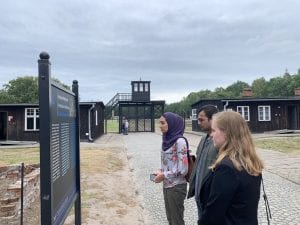
Finally, special mention must be given to experience of European Jews during the War. In our tour of the city, we visited one of the memorials of the Kindertransport. Gdansk was one of the cities where Jewish children emigrated out of Europe to the UK, without their parents. In our final day, the representatives of Patchworks visited the Stutthof concentration camp, which was just outside Gdansk. From both experiences, it was clear that the suffering of Polish Jews was unique and incomparable. Frans Trimmermans, EU Vice-President similarly picked up on this in his speech at Westerplatte, where he mentioned the unique tragedy that the Jewish community went through. Their experience should serve as a warning of what humans could be capable of, especially with the current increase of anti-Semitism across the world. 


About the author:

Abdulla Zaman is a future trainee solicitor for Latham & Watkins and is currently preparing for the Legal Practice Course at BPP University. He is a graduate of the Patchwork Foundation and is active in the mosque local to his community in Bromley. For his undergraduate degree, he studied History at the University of Cambridge, where he was involved in his college student union and the University Islamic Society.

Privilege, History & Determination: Reflections on the IVLP 2019

Privilege, History & Determination. Those are three words I’d use to describe my IVLP experience in the United States of America, but to understand how I got there we’d need to back track to February 2018.

From February 2018, I have been involved with the Patchwork Foundation – a UK charity whose flagship Masterclass programme I graduated from in December 2018, aims to improve upward social mobility by giving young people from unrepresented groups a chance to learn from senior officials from the public sector, media and business through intimate masterclass sessions.
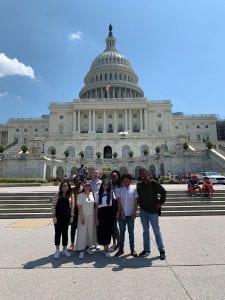
The Patchwork Foundation’s brilliant work led to a special relationship with the US Embassy in London, where bespoke masterclasses amongst other projects were collaboratively held. The IVLP is a US State Department cultural exchange programme that has been around for 80 years and allows emerging leaders to come to the USA for a tailored experience The Patchwork Foundation joined forces with the US Bureau of Educational and Cultural Affairs to create a bespoke version of the International Visitor Leadership Programme solely for selected Patchwork graduates. Through a rigorous selection process, I was fortunate to be selected and became one of 8 UK Patchwork graduates to attend the Patchwork IVLP programme from 27th July to 10th August 2019.

We had 20 professional engagements, in 14 days across 4 different cities. We were extremely privileged to learn a lot in a relatively short amount of time.

Here are 4 things I learnt from the USA cities we visited:

1) Washington D.C: The Importance of History

US Capitol Building

The capital city of the USA taught me the importance of history. Despite being a relatively recent ‘Western’ capital being created in 1790, it was filled with monuments and symbolism reflecting the USA’s political history. However, what most captivated me was having a tour of the 2016 completed National Museum of African American History & Culture, designed by British Ghanian architect Sir David Frank Adjaye OBE RA. The museum curated pieces from pre-colonial Africa; slavery; colonialism; emancipation; jim crow segregation; desegregation; civil rights up until Obama and more.

As an urbanist, it was particularly harrowing to see the racial housing segregation section as pictured below, with its effects still being seen as we go on to visit other cities. Despite how sad, understanding your past helps to navigate your future.

2) Baltimore (Maryland): Unpublicised Narratives of Determination

Yo! Foundation, Baltimore

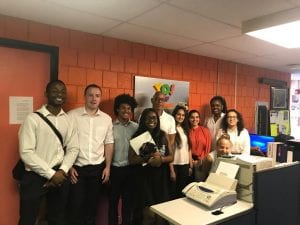
Sometimes cities reputation’s can be tainted through TV shows or negative stereotypes, Baltimore is one such city. Although it has suffered a lot of urban disinvestment and the associated effects of that, two particular NGOs stood out to me for showing a spirit of resilience. Youth Opportunity! (YO!), who engage 16 to 21 year-olds with employment programmes and Community Law in Action (CLIA) who run summer schools for young citizens. These organisations were both determined to help create an alternative narrative for young people in Baltimore.


3) Charlotte (North Carolina): The Power of Reading


Charlotte Hornets


We were gifted the chance to speak to people from the NBA’s legend Michael Jordan’s basketball team’s CSR department, The Charlotte Hornet Foundation.

I loved seeing their ‘Book Bus’ that would drive to schools, along with their mascot and read to children! Dave a member of staff who helped to spear head their literary programme really emphasised the power reading has to create leaders.


4) Detroit (Michigan): Resilient Communities


Community Development Advocates of Detroit

Detroit is a city that really suffered from USA racial housing segregation, such as redlining or more recently disproportionate predatory loans for black families, that the Washington African American History & Culture Museum reminded me of. Despite this past we met two NGOs that I will always remember Detroit. One was Developing K.I.D.S, a year round experiential learning scheme that develops youth ages 5-21 through academia, art, dance and sport.

The other NGO was Community Development Advocates in Detroit (CDAD) who are an NGO who build capacity for their 100 other member NGOs based in Detroit working within land use planning.Overall the USA taught me that despite inequalities, there are a large amount of people working tirelessly on the ground to improve equity for Americans.

———
Chijioke Anosike is an alumnus of the Patchwork IVLP Programme, and recently completed his MSc Regional and Urban Planning Studies at the LSE. He works part time for an urban tech start up as a researcher using qualitative and quantitative data to illustrate a picture of London areas.
———

The views, thoughts, and opinions expressed in the text belong solely to the author, and do not necessarily represent those of the Patchwork Foundation, the Alumni Network, or other group or individual.

Defining Success in the Workplace: Alumni Network Roundtable Discussion

On Friday 17th of May, a series of Patchwork Alumni Roundtable discussions was launched at 10 Downing Street. The main aim of these roundtable discussions is to allow Patchwork Alumni members to discuss important topics related to self-development as well as provide broader peer support.

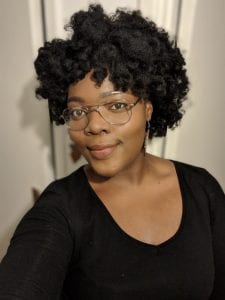
Zahra Latif, a Patchworker and now Private Secretary at the Prime Minister’s Unit, kindly offered to facilitate the first roundtable format discussion at 10 Downing Street. The topic of discussion was “defining success in the workplace”. At the beginning of the discussion, Zahra gave a brief introduction into her role as Private Secretary and explained her most important factors to determine success in the workplace; diversity of people’s backgrounds, and being the helping hand we wish to have through mentoring. Drawing from her own experience, she explained how being a young person from an underrepresented background allowed her to stand out in her job interview. “Be authentic to yourself, always question your intentions” she stated. Such piece of advice and encouragement are very valuable to me as I am going to enter the working world very soon.

In addition to this, many other Patchworkers gave their own opinion of “what success at the workplace means for them”. Unsurprisingly, we reached the conclusion as to how success should be measured against doing as much good in society as you can. Personally, as a Patchworker, this is indeed a very important measure of success that I will take into account when entering the workplace.

This opportunity is really important and beneficial for the Alumni as we can learn from each others experiences and take on someone else’s advice. Thanks to this opportunity, a Patchworker cannot only avoid making mistakes, but also be confident when faced with particular situations.

Personally, listening to Zahra’s journey made me feel really inspired. Her story demonstrates how it is possible for a young person from an underrepresented background to thrive in such a privileged work environment as such as No. 10 Downing Street.

Written by Diana Reyes Rafael. Diana is a second-year law student at SOAS University of London. She graduated from the Patchwork Foundation Masterclass Programme in 2018, and is now supporting with the 2019 Masterclass Programme. She aspires to become a qualified solicitor, and stand for a political office in the near future.

Everything to Everyone: Alumni Blog

Written by Leonie Mills

If you grew up less privileged or in underrepresented environments, you may feel pressure to excel in all areas. Especially at work. Your job matters and your career trajectory matters more. Additionally, you may have interests, hobbies, side hustles outside of work that demand your attention too. But what happens when you also care about those coming behind you and want to make a change, so they don’t endure the same barriers you did?

Is it your job as the underrepresented to work on breaking barriers and bringing people up? Many are not hired as diversity/inclusion/HR professionals but end up doing it alongside their job.  As someone who has benefited from schemes and programmes that are specifically targeted towards women, working class or BAME individuals, I always put my hand up to assist at work for greater D&I. I know that if I don’t help then I can’t expect things to change. Yet it shouldn’t be like that. Essentially it is free labour that someone could and should be hired for.

On the one hand if you do nothing, I’m sure there are others at work who will. But there are certain skills, experiences and contacts that you have, and your input could bring value and move things forward. Conversely if you get involved and give extra time, it takes away from your actual job and it can become your identifier. Instead of being seen as an expert/specialist in your area you are now pigeonholed to being the ‘diversity’ person. You know “the one who’s always talking about diversity”. The one who is asked to speak about representation but not much else, despite you being knowledgeable and capable in your actual field.

So, what should you should do?

Of course, there isn’t a one size fits all answer. It wholly depends on your motivations and ambitions, but most importantly your experiences. Personally, people who haven’t benefited from targeted schemes and programmes tend not to involve themselves in such things. That is fine. No one should make you feel guilty for not doing anything, especially if it is free labour.  As an underrepresented person focusing on your job and excelling in your career, that potentially means you will become an inspiration in the future. You don’t necessarily have to do anything, just by being successful, people now have someone to look up to.

During my time as a Patchworker, I noticed a trend of many who were involved in furthering diversity and representation at their work, university or school. It wasn’t their job, but it was an important priority. If you truly do care and want to make a change, ultimately you find the time to fit it all in. You organise and prioritise accordingly, so that your work doesn’t suffer but you are holding doors open for those coming behind you. Finding a solid group of people who have similar ambitions and passions are intrinsic in balancing all your commitments. People who you can rely on to move things forward in your absence but also keep you accountable for work.

Is it fair that those who are most marginalised end up doing extra work to produce a more inclusive environment that will benefit everyone?  

—————

Leonie Mills is a graduate from the University of Sheffield where she obtained a Bachelor’s Degree in International Politics & Security Studies. Due to her focus on black feminism, after graduating she collaborated with her former lecture and published an article in the “International Feminist Journal of Politics”. Leonie is very passionate about politics particularly issues affecting the African Diaspora and women. She is currently on a graduate scheme at a media agency.

—————

The Patchwork Alumni Network shall over the coming months be profiling blogs from our Alumni, seeking to encourage an exchange of ideas and opinions. 

The views, thoughts, and opinions expressed in the text belong solely to the author, and do not necessarily represent those of the Patchwork Foundation, the Alumni Network, or other group or individual.